
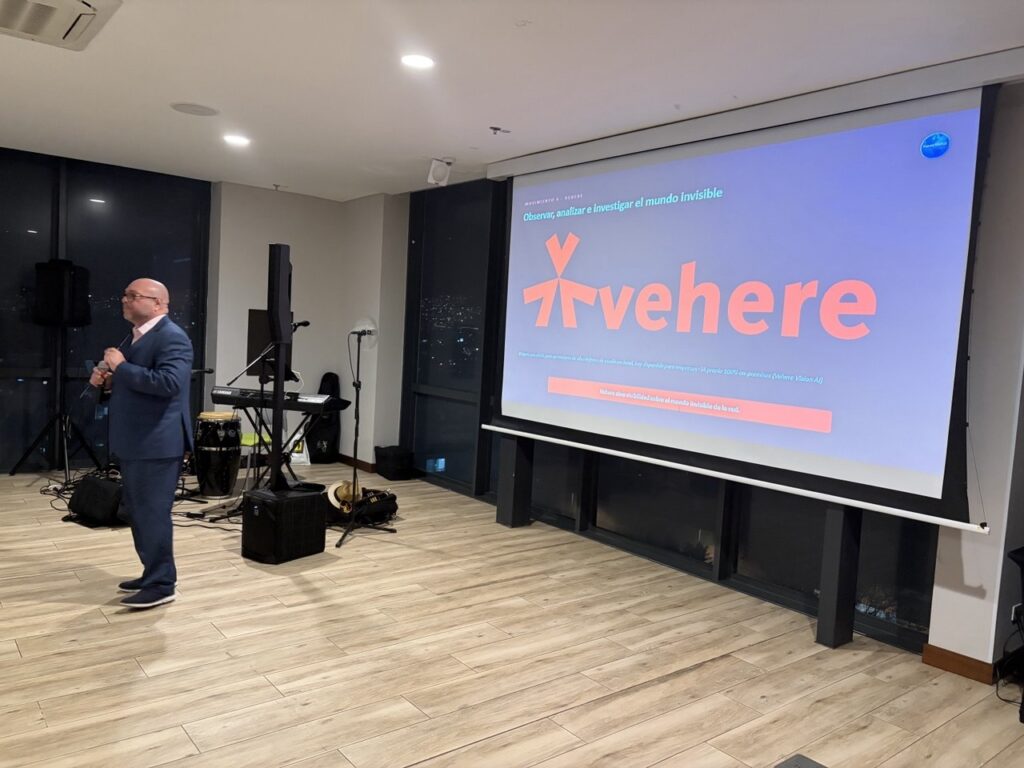

The techBTC Executive Summit 2026, held on August 26 in Bogotá, marked the addition of Cybersecurity as a new business area for techBTC and the presentation of Vehere Network Detection and Response (Vehere NDR).
The event brought together customers, integrators, manufacturers, partners, and security professionals from different Latin American countries. The discussion focused on an operational question: how can organizations expand their analytical capabilities when an incident may involve both physical systems and activity within the network?
The remarks by Ivo Cepero, CEO of techBTC, provided context for that decision, while the Vehere NDR presentation brought the discussion into the technical domain.
The techBTC Executive Summit 2026 provided the context for a new stage
This was the second edition of the techBTC Executive Summit in Bogotá. The private event encouraged direct conversations among customers, integrators, manufacturers, end users, partners, and the techBTC team.
The objective was to review how security is changing, which risks require a different perspective, and which decisions demand greater technical context.
This approach is part of the way techBTC works: first understand the operation, review constraints and risks, and then define which technology makes sense for each project.
Our CEO explains why techBTC is incorporating Cybersecurity
During the opening remarks, Ivo Cepero explained that the security industry is often immediately associated with cameras. From that starting point, he presented a broader view: techBTC works with concepts such as risk, threats, and vulnerabilities, and those concepts must also be analyzed in the digital environment.
Cepero announced the addition of techBTC’s Cybersecurity division. The new business area complements the company’s experience in electronic security and adds capabilities to analyze situations in which part of the evidence and activity that must be investigated travels through the network.
This shift requires teams to review what needs to be observed, which data should be retained, and what capabilities are required to investigate and respond with sound technical judgment.

Cybersecurity at techBTC, from the physical environment to the network
José Manuel Martínez Robles presented the new Cybersecurity line with a simple idea: physical security allows us to observe people, access points, perimeters, vehicles, facilities, and events. The network contains a different set of signals: traffic, anomalous connections, lateral movement, suspicious communications, compromised devices, or data leakage.
The presentation summarized it this way:
👁️ “What is visible remains essential… but it is no longer enough.”
This perspective helps explain the convergence between physical security and cybersecurity. A single incident may involve a credential, physical access, and then activity within the network. If each part is reviewed separately, the investigation may remain incomplete.
That is why the technical decision must begin with context: which risk needs to be observed, which systems are already in place, how they relate to one another, and what information the operation requires to investigate and respond.
Vehere NDR provides visibility and analysis of network traffic
As part of this new business area, techBTC presented Vehere Network Detection and Response (Vehere NDR) for Latin America and the Caribbean.
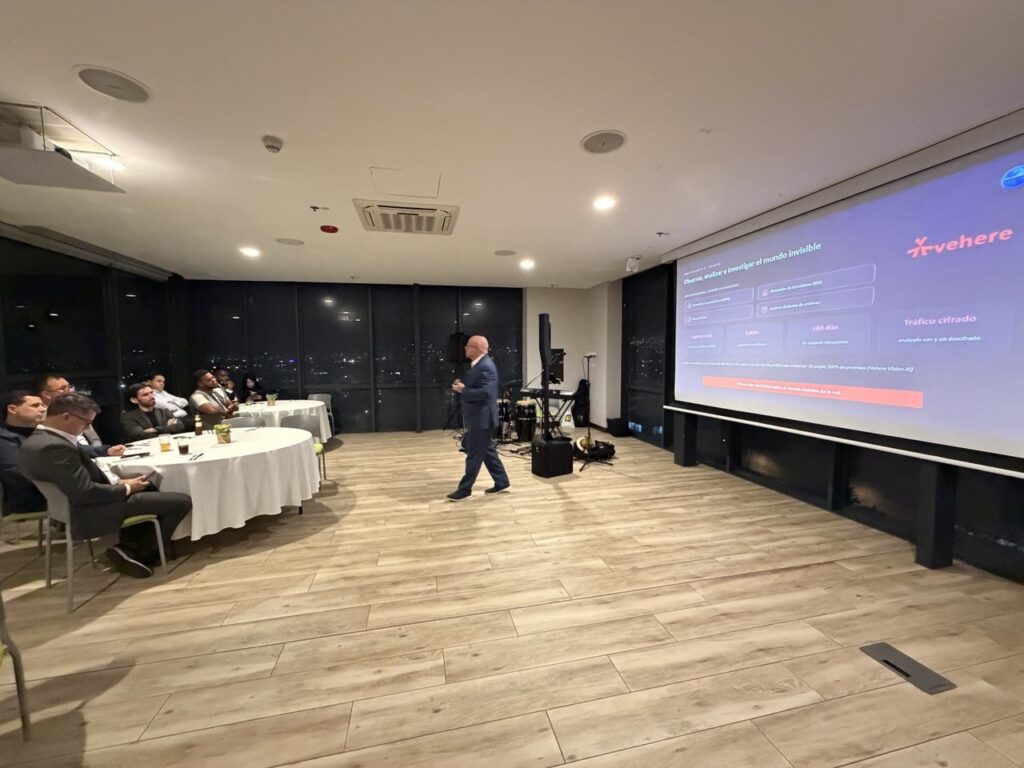
Vehere NDR is designed to observe, detect, and investigate activity within the network. Its official documentation brings together four main capabilities:
Network Detection and Response (NDR);
- Intrusion Detection System (IDS);
- Network forensics;
- Dynamic file analysis.
The manufacturer also documents full and continuous packet capture, encrypted traffic analysis, and retrospective hunting for up to 180 days. Vehere Vision AI operates through an on-premises architecture.
These capabilities provide information to investigate what happened within the network and reconstruct activity from recorded traffic. However, a technical datasheet alone does not define the right architecture.
In a real project, factors such as traffic volume, asset criticality, retention, storage, integration with existing tools, daily operations, and response capabilities must be reviewed. These conditions determine how an NDR platform should be sized and used.
Why Network Detection and Response?
A camera records what happens within its field of view. An NDR platform analyzes the activity traveling through the network.
Vehere NDR works with packets, sessions, behavior, and traffic to support detection and investigation processes. Its documentation includes session reconstruction, behavioral analysis, identification of anomalous activity, and encrypted traffic analysis.
For integrators and organizations, the useful question is not only what capabilities Vehere offers. The question is which risks the project needs to observe and what evidence will be required when an incident must be investigated.
Recognizing customers and the techBTC team
The Summit closed with a recognition segment for customers and team members.
techBTC recognized customers with whom it has built relationships around projects and opportunities. The company also presented the Top Sales recognition to Carlos García, a member of the techBTC team.
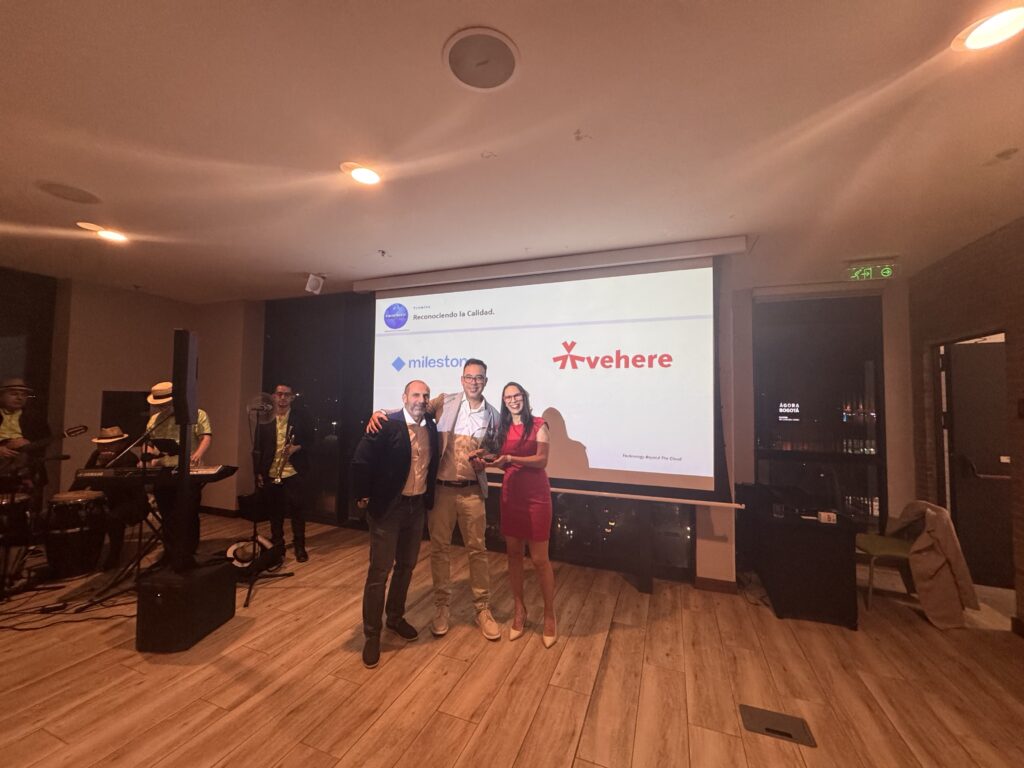

The closing brought together two elements of the company’s evolution: new technical capabilities and working relationships built with continuity.

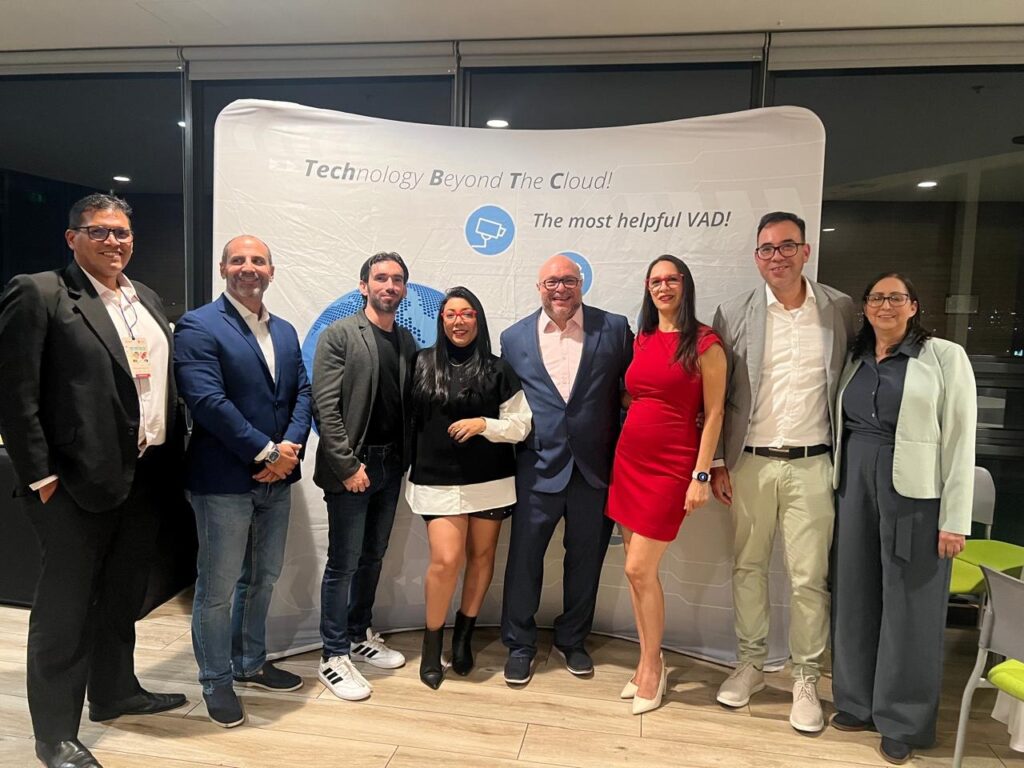
The techBTC Executive Summit 2026 brought together the techBTC team, customers, integrators, manufacturers, and partners in Bogotá.
A new capability, the same technical approach
The techBTC Executive Summit 2026 resulted in a concrete decision: to add Cybersecurity as a new business area and present Vehere NDR as a capability for observing and investigating activity within the network.
The convergence between physical security and cybersecurity requires architecture, data, operations, and response to be reviewed as parts of the same technical decision.
For techBTC, the principle remains the same: understand the context, review the risk, and structure technical decisions that can be sustained in operation.